Fig
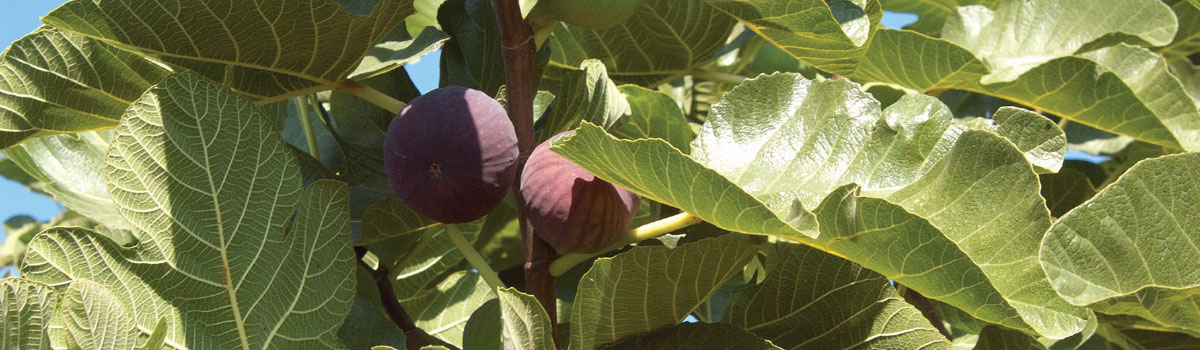
Ficus carica is an Asian species of flowering plants in the mulberry family, known as the common fig (or just the fig). It is the source of the fruit also called the fig, and as such is an important crop in those areas where it is grown commercially. Native to the Middle East and western Asia, it has been sought out and cultivated since ancient times, and is now widely grown throughout the temperate world, both for its fruit and as an ornamental plant. The species has become naturalized in scattered locations in Asia and North America.
Figs plants are easy to propagate through several methods. Propagation using seeds is not the preferred method since vegetative methods exist that are quicker and more reliable, that is, they do not yield the inedible caprifigs. However, those desiring to can plant seeds of dried figs with moist sphagnum moss or other media in a ziplock bag and expect germination in a few weeks to several months. The tiny plants can be transplanted out little by little once the leaves open, and despite the tiny initial size can grow to 1 foot (30 cm) or more within one year from planting seeds. Main vegetative propagation, or spring propagation: before the tree starts growth, cut 15–25 cm (6–10 inch) shoots that have healthy buds at their ends, and set into a moist mix of soil and peat-moss located in shade in first time, buried 3/4 of their length. Larger diameter stems are better – intermediate cuttings on branches can be done too (up to diam. 3/4") – but in this case the upper side must be cut inclined, thus marking the upper part, to avoid planting upside-down. Grow one year in a nursery, in a pot or in-ground spaced one foot apart, till winter. Before the plant starts growth, plant it in the desired final location.
For propagation in the mid-summer months, air layer new growth in August (mid-summer) or insert hardened off 15–25 cm (6-10 inches) shoots into moist perlite or a sandy soil mix, keeping the cuttings shaded until new growth begins; then gradually move them into full sun. For spring propagation, before the tree starts growth, cut 15–25 cm (6-10 inches) shoots that have healthy buds at their ends, and set into a moist perlite and/or sandy soil mix located in the shade. Once the cuttings start to produce leaves, bury them up to the bottom leaf to give the plant a good start in the desired location. An alternative propagation method is bending over a taller branch, scratching the bark to reveal the green inner bark, then pinning the scratched area tightly to the ground. Within a few weeks, roots will develop and the branch can be clipped from the mother plant and transplanted where desired.
| January | February | March | April | May | June | July | August | September | October | November | December |
|---|---|---|---|---|---|---|---|---|---|---|---|
 |
|
|
|
|
 |
|
|
|
|
|
|